
Business Partnership Disputes
I am a specialist partnership, business, company and commercial lawyer and barrister with real life commercial experience prior to qualifying.
Beyond just being a partnership, commercial and company lawyer, I have extensive experience of coal face business experience after setting up, growing, and successfully selling three of my own companies and from being involved in my third-generation family business when it entered administration in 2009.
I have been Chair of a Board or non-executive director of a wide range of businesses for over 15 years in the tech start up and education industries as well as for the largest NHS Clinical Commissioning Group in London serving over 369,000 people, commissioning over £400m in services.
What my clients say
“I contacted Robin for some advice and help with a messy business partnership. He was amazing and above all kind and understanding of the situation. Robin dealt with my issues quickly and professionally and went above and beyond my expectations. I cannot recommend him enough, his knowledge around business law was outstanding.“
Jennie Lee – Direct Access Client
Get in touch
Need help from a direct access UK barrister with a business, commercial, shareholder, board, contract or regulatory legal issue?
Resolving Business Partnership Disputes: Advice, Mediation and Litigation
Is Your Business Partnership in Trouble?
Partnership disputes are among the most disruptive and personally draining situations a business owner can face. Unlike a dispute with an external party, a partnership breakdown affects the working relationship at the heart of the business, the people you see every day, the arrangements you built together, and often a significant part of your personal financial future. Whether the dispute is about money, decision-making, one partner’s behaviour, or a fundamental breakdown in trust, the legal and commercial issues are rarely straightforward. The law provides a framework, but the right approach depends heavily on what you actually want to achieve: a negotiated exit, a buyout, dissolution of the partnership, a restructuring of the arrangements going forward, or enforcement of your rights through litigation. I act as a direct access barrister, commercial mediator and mediation advocate in business partnership disputes. I can be instructed without a solicitor in appropriate cases. This page provides an overview of the legal framework and the options available to you.What Is a Business Partnership?
A business partnership exists where two or more people carry on a business in common with a view to profit. A partnership does not need to be formally documented to exist. Where two or more people run a business together and share the profits, a partnership is likely to exist under the Partnership Act 1890 even if there is no written agreement between them. Many partnership disputes arise precisely because the arrangements between the partners were never properly documented. Where there is no written partnership agreement, or where the agreement does not cover the situation that has arisen, the Partnership Act 1890 applies as the default framework. The Act’s default rules are often not what the partners would have chosen if they had turned their minds to the issue, which is one of the reasons disputes arise. Limited liability partnerships, or LLPs, are a separate legal structure governed by the Limited Liability Partnerships Act 2000 and the LLP Agreement between the members. Disputes within LLPs raise some similar issues to traditional partnerships but are governed by a different legal framework.Common Causes of Partnership Disputes
Partnership disputes arise for a wide range of reasons, but some causes are more common than others. Disagreements over the distribution of profits, often where one partner believes they are contributing more than the other but receiving equal shares, are among the most frequent. Exclusion of one partner from day-to-day management or decision-making, particularly where the partnership agreement or the established practice gave that partner a role in running the business, is another. Disputes over the ownership of assets, including property, intellectual property and goodwill, frequently arise when a partnership breaks down and the partners cannot agree on what belongs to whom. Retirement and exit disputes are common where one partner wants to leave but cannot agree the terms of their departure, the value of their share, or the obligations that should follow them out of the business. Deadlock, where the partners have equal power and cannot agree on important decisions about the business, can bring a partnership to a standstill even where there is no fundamental breakdown in the relationship. And where one partner believes another has acted improperly, whether by diverting business opportunities, misusing partnership funds, competing with the partnership, or acting in breach of the partnership agreement, the dispute can become both legally and personally complex.The Legal Framework for Partnership Disputes
The Partnership Act 1890
The Partnership Act 1890 is the default legal framework governing traditional partnerships in England and Wales. Where there is no partnership agreement, or where the agreement is silent on a particular issue, the Act’s provisions apply. Key default rules under the Act include that partners share profits and losses equally regardless of the work each puts in, that any partner can dissolve the partnership at any time by giving notice, that partners are agents of the partnership and can bind it in transactions, and that partners owe each other duties of good faith. These default rules often do not reflect what the partners actually intended or agreed, which is why a well-drafted partnership agreement is important and why the absence of one creates such fertile ground for disputes.The Partnership Agreement
Where a written partnership agreement exists, its terms govern the relationship between the partners subject to any overriding legal requirements. A well-drafted agreement will cover how profits and losses are shared, how decisions are made and what majority is required, how a partner can retire or be expelled, how the partnership can be dissolved and the assets distributed, what happens to goodwill and clients, restrictions on competition after departure, and dispute resolution provisions. Where a partnership agreement exists but one party has acted in breach of its terms, you may have a contractual claim for breach of the agreement. Where the agreement covers the situation that has arisen, it will generally determine the outcome, though there is often significant scope for argument about what the agreement actually means in practice.Duties Partners Owe Each Other
Partners owe each other duties of good faith and must account to the partnership for any benefit they obtain from partnership transactions without the consent of the other partners. A partner must not compete with the partnership without consent, must not make a secret profit, and must act honestly in their dealings with co-partners. Where a partner has breached these duties, there may be a claim for account of profits or compensation for the loss caused.Options for Resolving a Partnership Dispute
Negotiation
Many partnership disputes are resolved through direct negotiation between the partners, often with legal advice on each side. Negotiation is the fastest and cheapest route to resolution if the parties are able to engage constructively. Early legal advice on your position before entering negotiation is important, because the terms you agree at an early stage can be difficult to revisit later.Mediation
Where direct negotiation has broken down or is not possible, mediation offers a structured and confidential route to a negotiated settlement without the cost and uncertainty of litigation. A skilled mediator can help partners move beyond entrenched positions to identify solutions that address the real issues on both sides, whether that is a buyout, a restructuring, a dissolution or another commercial arrangement. I act as a commercial mediator in partnership disputes and have significant experience of helping parties in these situations reach durable settlements. I also act as a mediation advocate, representing one party in a mediation and working to achieve the best possible outcome for that client. For more on both roles see my commercial mediator page and my mediation advocate page.Litigation
Where negotiation and mediation have failed, or where urgent legal intervention is required, litigation may be necessary. Partnership disputes are heard in the Business and Property Courts and in the County Court, depending on the value and complexity of the claim. Common forms of litigation in partnership disputes include claims for an account of profits, claims for breach of the partnership agreement, applications to dissolve the partnership and have its assets distributed, and claims for injunctive relief where one partner is acting in a way that is causing immediate harm to the partnership or the other partners. Litigation is expensive, time-consuming and uncertain. Assessing whether it is the right course requires a clear-eyed analysis of the legal merits, the likely costs, the prospects of recovering those costs, and whether a negotiated solution is achievable that would deliver a better outcome at lower risk. I can help you make that assessment and, where litigation is the right course, advise and represent you as a direct access barrister.Dissolution
Where the partnership cannot continue and the partners cannot agree on the terms of winding it up, one partner may apply to the court for the dissolution of the partnership and the appointment of a receiver to realise the assets and distribute the proceeds. Dissolution can also occur automatically in certain circumstances under the Partnership Act 1890, including where a partner gives notice to dissolve, where a partner dies or becomes bankrupt, or where the partnership was formed for a fixed term that has expired.Particular Issues in Partnership Disputes
Valuation of the partnership and goodwill
One of the most contested issues in partnership disputes is the value of the departing partner’s share, particularly where the partnership has built up significant goodwill. How goodwill is valued, and whether a departing partner is entitled to a share of it, depends on the terms of the partnership agreement, the nature of the goodwill, and how the courts have approached similar situations. Getting the right expert valuation evidence at an early stage is often critical.Restrictive covenants
Many partnership agreements contain restrictive covenants preventing a departing partner from competing with the partnership, poaching clients or staff, or using confidential information after their departure. Whether these covenants are enforceable, and to what extent, is a fact-sensitive analysis that requires careful legal advice. Covenants that are too wide may be unenforceable, but properly drafted covenants can significantly affect a departing partner’s ability to continue in the same market.Claims involving the estate of a deceased partner
Where a partner dies, their estate may have rights against the surviving partners depending on the terms of the partnership agreement and what the deceased partner was owed at the date of death. These claims can be complex, particularly where the partnership agreement does not adequately address what happens on a partner’s death. I have experience of disputes involving the estates of deceased partners and the particular complications they raise.LLP member disputes
Disputes between members of a limited liability partnership raise issues similar to those in traditional partnership disputes, but governed by the LLP Agreement and the relevant statutory framework rather than the Partnership Act 1890. The principles of good faith, profit sharing, expulsion and exit apply in a similar way, but the specific rights and remedies available depend heavily on the terms of the LLP Agreement.Partnership Disputes in the Context of Family Businesses
Many business partnerships exist within the context of a family business, and when they break down the legal and commercial issues are compounded by personal and family dynamics. These disputes often involve siblings, parents and children, or other family members whose personal relationships will continue regardless of what happens to the business. For more on this particular context see my family business disputes page.What My Clients Say
“I contacted Robin for some advice and help with a messy business partnership. He was amazing and above all kind and understanding of the situation. Robin dealt with my issues quickly and professionally and went above and beyond my expectations. I cannot recommend him enough. His knowledge around business law was outstanding.” Jennie Lee, direct access client “…outstanding… beyond reproach… best possible outcome… fully recommend… cannot thank him enough.” “Your expert legal advice is second to none and your client care is beyond compare.” “Without doubt, the best money I have ever spent.” See all testimonials.Published Resources
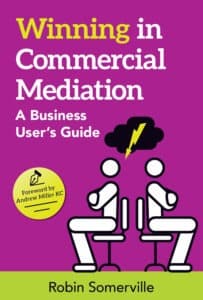
My book The Shareholder Disputes Handbook is primarily focused on company shareholder disputes but covers significant ground that is directly relevant to partnership disputes, including the legal framework for disputes between business owners, remedies and strategic options, and the role of mediation in achieving commercial resolution. Many partnership disputes and company shareholder disputes involve similar underlying issues and the same strategic thinking applies. Winning at Commercial Mediation is directly relevant for partners approaching or considering mediation as a route to resolution, covering how to prepare strategically and negotiate effectively to achieve the best available outcome. See all books.Frequently Asked Questions
Does a partnership agreement need to be in writing?
No. A partnership can exist without any written agreement, and many do. However, where there is no written agreement the Partnership Act 1890 applies as the default framework, and its rules may not reflect what the partners actually intended. The absence of a written agreement significantly increases the risk and cost of disputes because the partners have to establish what was agreed, often years after the event.Can I dissolve a partnership without my partner’s agreement?
Under the Partnership Act 1890, a partner in a partnership at will can dissolve the partnership at any time by giving notice to the other partners. However, the right to dissolve does not resolve the question of how the assets are distributed and what each partner is owed. That often requires negotiation, mediation or litigation to resolve if the partners cannot agree.What happens to partnership assets when a partnership dissolves?
On dissolution, the partnership assets are realised and the proceeds applied first to pay the partnership’s debts and liabilities, then to repay what partners are owed on their capital and loan accounts, with any surplus shared between the partners in the proportions in which they share profits. Where the partners cannot agree on how the assets are valued or distributed, the court can appoint a receiver to manage the process.Can I get an injunction to stop my partner from competing with the partnership?
Potentially yes, depending on whether the partnership agreement contains enforceable restrictive covenants and whether your partner’s conduct amounts to a breach of their duties to the partnership. Injunctive relief is available in urgent cases where there is a real risk of immediate and irreparable harm. Early advice is essential as applications for injunctions need to be made promptly.Is mediation suitable for partnership disputes?
Yes, and it is often particularly well suited to partnership disputes. Because the parties have a shared history and may need to reach a commercial arrangement that works for both of them going forward, a negotiated settlement achieved through mediation is often more durable and satisfactory than a court-imposed outcome. I act as both a commercial mediator and mediation advocate in partnership disputes.Can I instruct a barrister directly without a solicitor?
Yes. As a direct access barrister, I can be instructed without a solicitor in appropriate cases. This can provide earlier access to specialist advice and more controlled costs. Contact me to discuss whether direct access is suitable for your situation.What is the difference between a partnership dispute and a shareholder dispute?
A partnership dispute arises between partners in a traditional partnership or LLP, governed primarily by the Partnership Act 1890 or the LLP Agreement. A shareholder dispute arises between shareholders in a company, governed primarily by the Companies Act 2006 and the company’s articles and any shareholders’ agreement. The underlying issues are often similar, including disagreements over control, profit, exit and conduct, but the legal framework and available remedies differ. See my shareholder disputes page for more on company shareholder disputes.Get Advice on Your Situation
If you are involved in a business partnership dispute, whether as a partner seeking to protect your position or enforce your rights, or as a partner facing a claim, early specialist advice can make a significant difference to the outcome. I act as a direct access barrister advising and representing clients in partnership disputes, as a commercial mediator helping partners reach negotiated settlements, and as a mediation advocate representing one partner in mediation to achieve the best possible outcome. You may also find these pages helpful:- Direct Access Barrister for Business and Shareholder Disputes
- Commercial Mediator
- Mediation Advocate
- Family Business Disputes
- Unfair Prejudice Claims and Derivative Actions
- The Shareholder Disputes Handbook
Last Updated on %post_modified% by Robin Somerville
Fixed-Fee Workplace and Employment Mediation | One Day, 28 Days, From £1,999
See Full DetailsMy services
Barrister: Shareholder, Partnership, Business
Legal advice, strategy & advocacy
Mediator: Shareholder, Partnership, Business
Helping businesses resolve disputes
Independent HR Workplace Investigator
Independent external HR investigations
Accrediations
Get in touch
Want to check my availability? Need some legal or strategic advice? Or a fee proposal?
I am a direct access barrister. You can save time and money by instructing me using the direct or public access scheme. Or go through your solicitor.
Call 020 3909 9727 or use the contact form.

