
Shareholder Disputes: A Practical Guide for Business Owners, Directors and Family Businesses
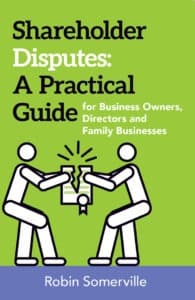
Shareholder disputes are among the most disruptive events a business can face. They drain time, money and trust, they threaten the stability and value of the company, and they frequently arise in businesses that were commercially successful and professionally managed right up to the moment the relationship between shareholders broke down. This book explains how shareholder disputes arise, how English law addresses them, and how business owners, directors and shareholders can protect their interests and resolve conflicts as effectively as possible.
The book covers unfair prejudice petitions under Section 994 of the Companies Act 2006, derivative claims under Section 260, just and equitable winding up under the Insolvency Act 1986, breach of shareholders’ agreement claims, and the range of personal claims that may be available to shareholders. It covers the costs and risks of shareholder litigation frankly and in practical terms. It explains the role of mediation in resolving shareholder disputes and the courts’ strong expectation that parties will engage with it seriously before and during proceedings. Throughout, every principle is applied to the Whitcombe Family Business Dispute, a running case study involving a family hotel company, multiple shareholders with conflicting interests, and allegations of serious misconduct by the managing director.
“A clear, practical and highly readable guide to one of the most complex and emotionally charged areas of company law. Essential reading for anyone involved in a shareholder dispute, particularly if they want to preserve value and relationships.” Alex Kennedy, Solicitor Advocate, Gannons Solicitors
Written for business owners, company directors, shareholders in private companies, family businesses, entrepreneurs in joint ventures and their professional advisers. Price: £49.99.
Winning in Family Business Disputes
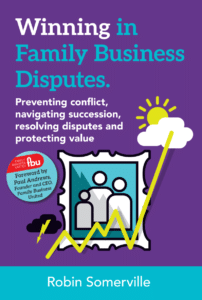
Only thirty per cent of family businesses survive into the second generation. Twelve per cent reach the third. Three per cent reach the fourth.
What kills them is rarely a single dramatic event. It is usually a long-running failure to have the conversations that families do not want to have: succession, dividends, fairness, control, and what happens when someone wants out.
This book explains why family business disputes are different, what causes them, how to prevent them, and what the law can and cannot do once a dispute has arrived.
For:
Founders • Next Generation • Family Shareholders • Advisers • Lawyers
Learn about:
* Why family business disputes are different from any other commercial dispute
* Succession planning and the founder’s dilemma
* Governance failures and how to prevent them
* Mediation and ADR in family business disputes
* Unfair prejudice, derivative claims and just and equitable winding up
Winning at Commercial Mediation: A Business User’s Guide
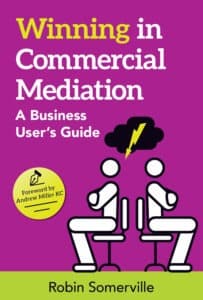
Commercial mediation has become a central feature of dispute resolution in England and Wales. Courts increasingly expect parties to engage with it seriously and at an early stage. Following Churchill v Merthyr Tydfil [2023], courts can now order parties to attempt mediation before proceeding to trial. The costs consequences of unreasonable refusal are real and well-established. Yet many business leaders approach mediation without understanding how the process actually works, how mediators manage negotiations, how to prepare strategically, or how settlement outcomes are reached. This book addresses that gap comprehensively.
The book covers the complete commercial mediation process from first consideration through to post-settlement implementation: what mediation is, why to agree to it and the consequences of refusing, how to choose the right mediator, the legal and procedural framework, how the mediation day works in practice, strategic preparation including BATNA and ZOPA analysis, how to manage offers and concessions, how to read and respond to pressure tactics, the psychological dimension of mediation including the cognitive biases that consistently cause parties to make worse decisions than they should, 50 top tips for getting the best outcome, 20 of the most common and damaging mistakes to avoid, and a guide to the 20 most important decided cases about commercial mediation. Every concept is applied to the Whitcombe Family Business Dispute case study throughout.
“This is a treasure trove of a guide filled with genuine insight, distilled experience and a deep knowledge of how mediation works in commercial disputes. It will help directors and shareholders engage with the process skilfully and successfully.” Phillip Howell-Richardson, Legal 500 Hall of Fame, Chambers UK Band 1, Distinguished Fellow of the International Academy of Mediators, Lexology Index Global Elite
“I would recommend this book to any business owner contemplating mediation. It explains how to approach the process in a way that protects enterprise value while managing litigation risk.” Paul Johnson, Legal 500 Hall of Fame ranked commercial mediator
“Every business owner, CEO, director and shareholder should read this guide and have it sitting on their desk at arm’s reach. It’s a clear step by step approach that demystifies the mediation process and explains how and when to use it to add value rather than cost in times of crisis.” Jane Gunn, International commercial mediator and author of the highly regarded leadership parable The Mole and The Mountain
“Robin Somerville’s Winning in Commercial Mediation should be compulsory reading for all business owners and their advisers facing the lottery that is litigation. Here he explains simply and comprehensively why mediation is a better way to resolve business disputes. I thoroughly recommend it.” Andrew Goodman, Distinguished Fellow of the International Academy of Mediators and author of Effective Mediation Advocacy
Written for business owners, company directors, shareholders, partners in professional firms, commercial managers and executives, and legal advisers representing clients in commercial disputes. Price: £49.99.
Winning in Workplace and Employment Mediation
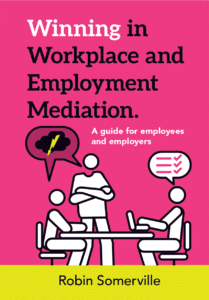
Workplace conflict is estimated to cost UK employers around £30 billion every year. Most of those costs are avoidable.
The barrier to early resolution is rarely the money. It is usually the timing of the decision: when to bring in a mediator, when to wait for an investigation, and how mediation sits alongside grievance, disciplinary and tribunal processes running at the same time.
This guide explains the difference between workplace mediation and employment mediation, when each is appropriate, how to prepare effectively, and how to build a mediation-ready organisation.
For:
Employees • Employers • HR Teams • In-House Counsel • Mediation Advocates
Learn about:
* Workplace mediation vs employment mediation: which applies and when
* When mediation is the right answer and when it is not
* Settlement agreements and section 111A of the Employment Rights Act
* Choosing the right mediator and the right mediation style
* Building a mediation-ready organisation
The Workplace and Corporate Investigator’s Handbook
Workplace investigations are one of the most challenging and high-risk responsibilities facing organisations and HR professionals. They arise when tensions are high, relationships are strained, and the organisation must establish the facts quickly, fairly and in a way that will withstand scrutiny from the subject, the complainant, employment tribunals and where necessary regulators and courts. Handled properly, investigations establish the truth, protect individuals and the organisation, support defensible decision-making and reduce legal risk. Handled poorly, they lead to tribunal claims, regulatory problems, reputational damage and significant financial cost.
This handbook provides a comprehensive, step-by-step practical guide to conducting workplace and corporate investigations that are structured, fair and defensible. It opens with the question that every organisation must answer before committing to a formal investigation: does this actually need to be investigated, or would mediation or informal resolution be a better approach? From there, it covers the full investigation process in depth: drafting allegations clearly and fairly, choosing the right investigator, planning and managing an investigation, gathering and evaluating evidence, preparing for and conducting witness interviews, drawing conclusions and assessing credibility, writing a clear and defensible investigation report, building an evidence bundle, handling specialist and senior-level investigations, using AI tools in investigations, regulatory and police referral, and organisational learning from investigations. The Meadowbrook Care Home case study runs throughout, applying every principle to a complex and realistic multi-allegation investigation scenario.
“A clear and practical guide for how to conduct workplace investigations and to avoid the pitfalls from a highly experienced investigator.” Jeffrey Jupp KC, Barrister, 7 Bedford Row Chambers
“You, reader, are very fortunate to have obtained this handbook which, if you appropriately apply the pointers contained within it, will save you time, money, stress and potential involvement in messy and unpleasant legal proceedings.” Leslie Cuthbert, Former investigator and author of Effective Interviewing for Disciplinary, Grievance and Complaints Investigations
“The task of getting to the bottom of what went wrong in the workplace or establishing whether anything did, can be a daunting one even for seasoned analytically minded professionals and its challenges are infinitely varied. I don’t know any other book that delivers what Robin does here. He puts his considerable experience in this space at the disposal of the reader, providing a comprehensive, reassuring and above all usable professional tool for investigators, both in-house and external. This needs to be on the desk of every HR business manager.” Mike Cain, Employment Partner, Keystone Law, recognised by Chambers and The Legal 500 for employment law
Written for HR directors and HR managers, internal and external workplace investigators, senior executives and board members, and employment lawyers advising on investigation process and legal risk. Price: £49.99.
Winning in the Witness Box: A Practical Familiarisation Guide to Giving Evidence in Court or Tribunal

For many people, giving evidence in court, tribunal or regulatory proceedings is one of the most stressful experiences they will ever face. Most witnesses are entirely unfamiliar with how questioning works, how cross-examination operates, how documents are introduced and used, and how judges actually evaluate credibility. Without an understanding of these processes, even honest and well-intentioned witnesses become confused, defensive or inaccurate under pressure. This book explains how the process of giving evidence works and helps witnesses prepare themselves to give clear, accurate and reliable evidence. Its aim is not to coach or rehearse evidence, which would be improper and counterproductive, but to help witnesses understand the structure and realities of the process so they can participate with composure and confidence.
The book covers the full experience of being a witness: what the role of a witness is and what it is not, how to prepare properly within the ethical limits, the critical distinction between legitimate witness familiarisation and improper witness coaching, what giving evidence in the witness box actually involves including the oath, examination in chief, cross-examination and re-examination, the specific techniques that cross-examiners use and how to respond to them with discipline and accuracy, how judges and tribunals actually assess credibility and what behaviours consistently build or undermine it, supporting vulnerable, neurodivergent and anxious witnesses, and the practical realities of civil court, criminal court and employment and other tribunal proceedings.
“This practical guide on witness familiarisation equips witnesses with the understanding and confidence to be able to give their best evidence. In demystifying the process and providing useful tips this book is invaluable in providing an introduction to what to expect and what to do if you ever have to give evidence.” Leslie Cuthbert, Former Chair of the Solicitors Association of Higher Court Advocates and author of 365 Daily Advocacy Tips
Written for witnesses preparing to give evidence in civil courts, employment tribunals or other formal proceedings, professionals appearing before regulatory bodies, lawyers and HR professionals preparing witnesses, and organisations supporting staff who must give evidence. Price: £49.99.
Judgecraft
Decisions in courts, tribunals, regulatory panels and workplace hearings can end careers, remove professional licences and order substantial financial payments. The integrity of each decision depends on the discipline applied by the person making it.
Yet most decision-makers receive little formal training in how to approach the task. They are appointed for their seniority, technical expertise or subject knowledge rather than for any training in decision-making itself.
This book closes that gap with a structured, practical method for assessing evidence, managing bias, conducting hearings and writing reasoned decisions that survive scrutiny.
For:
Judges • Tribunal Members • Regulatory Panels • Workplace Investigators • Decision Makers
Learn about:
* Fairness, evidence and the nature of facts
* Recognising and managing cognitive bias
* Conducting hearings and panel deliberations
* Writing reasoned, appeal-proof decisions
* The Judgecraft Toolkit of practical templates and checklists
About the Author
Robin Somerville is a practising barrister, CEDR-accredited commercial mediator, mediation advocate and independent workplace investigator. Before qualifying as a barrister and mediator, he founded, grew and sold three technology businesses, one of which ended in a shareholder dispute that settled at mediation. He therefore brings both legal expertise and direct commercial experience to everything he writes. He has been involved in well over a thousand cases over more than twenty-five years, across commercial litigation, shareholder and business disputes, workplace investigations, disciplinary proceedings, mediation, employment tribunal proceedings and regulatory hearings. His investigation reports are quality assured by a Crown Court judge. He accepts instructions directly under the direct access scheme, meaning clients can instruct him without going through a solicitor first.
For more detail see his direct access barrister page, his commercial mediator page, his independent workplace investigator page, and his testimonials page.
Training and Speaking
These books are also used as training resources for organisations, law firms, regulators and HR teams.
Robin Somerville provides:
* Workplace investigation training
* Witness familiarisation training
* Mediation preparation training for law firms and HR teams
* Judicial decision-making training for tribunal members and regulatory panels
For enquiries about training, speaking engagements or bulk book purchases, please contact Robin directly.
Frequently Asked Questions
Are these books written for lawyers or for business people?
They are written primarily for business people, HR professionals, directors, shareholders and witnesses rather than for lawyers, though all four are also used by legal professionals as reference and training material. Each book explains the relevant legal and procedural concepts in plain English and focuses on practical understanding rather than technical legal analysis.
Can I buy the books in bulk for a law firm, HR team or training programme?
Yes. Bulk purchase arrangements are available for all four books. Please contact Robin directly to discuss pricing and arrangements for multiple copies.
Are the books available on Amazon?
Yes all of the books are available on Amazon as well as direct from this website. Amazon links are shown on each individual book page where available.
Do the books have companion knowledge guides on this website?
Yes. Each book is accompanied by an extensive free knowledge guide on this website. The Shareholder Disputes Knowledge Guide accompanies the shareholder disputes book. The Commercial Mediation Knowledge Hub accompanies the commercial mediation book. The Workplace and Corporate Investigations Knowledge Guide accompanies the investigator’s handbook. And the Witness Familiarisation Knowledge Guide accompanies the witness box book. Each knowledge guide is free to access and covers the same ground as the book in individual chapters.
Can I instruct Robin directly as a barrister, mediator or investigator?
Yes. Robin accepts instructions directly from clients under the Bar’s direct access scheme, without the need to instruct a solicitor first. He also acts as a commercial mediator, mediation advocate and independent workplace investigator. See his direct access barrister page, his commercial mediator page and his independent workplace investigator page for more detail.
What My Clients Say
“I cannot recommend the services of Robin Somerville enough. What seemed like a complicated and daunting legal procedure was made stress-free and he ensured a conclusion was reached much quicker than I would have thought. Without doubt, the best money I have ever spent.” Stephanie Bryan, Company Director
“Calm approach finding solutions for tricky problems. Exceptional. Second to none. A really true professional.”
“Outstanding. Beyond reproach. Best possible outcome. Fully recommend. Cannot thank him enough.”
Get in Touch
If you would like to discuss instructing Robin as a barrister, mediator, investigator or trainer, or if you have questions about bulk book purchases or speaking engagements, he would be glad to hear from you.
Call 020 4538 0246, use the contact form below, or book a call directly.